Health System: Structural Problems and Coordination Issues
Austria's healthcare system is characterised by a complex and fragmented structure of planning, decision-making, and financing. The governance analysis shows that this creates misaligned incentives in patient steering as well as coordination problems between outpatient and inpatient care. Combined with fragmented financing structures, this tends to encourage patients to make greater use of costly hospital outpatient services or inpatient treatment rather than consulting office-based physicians.
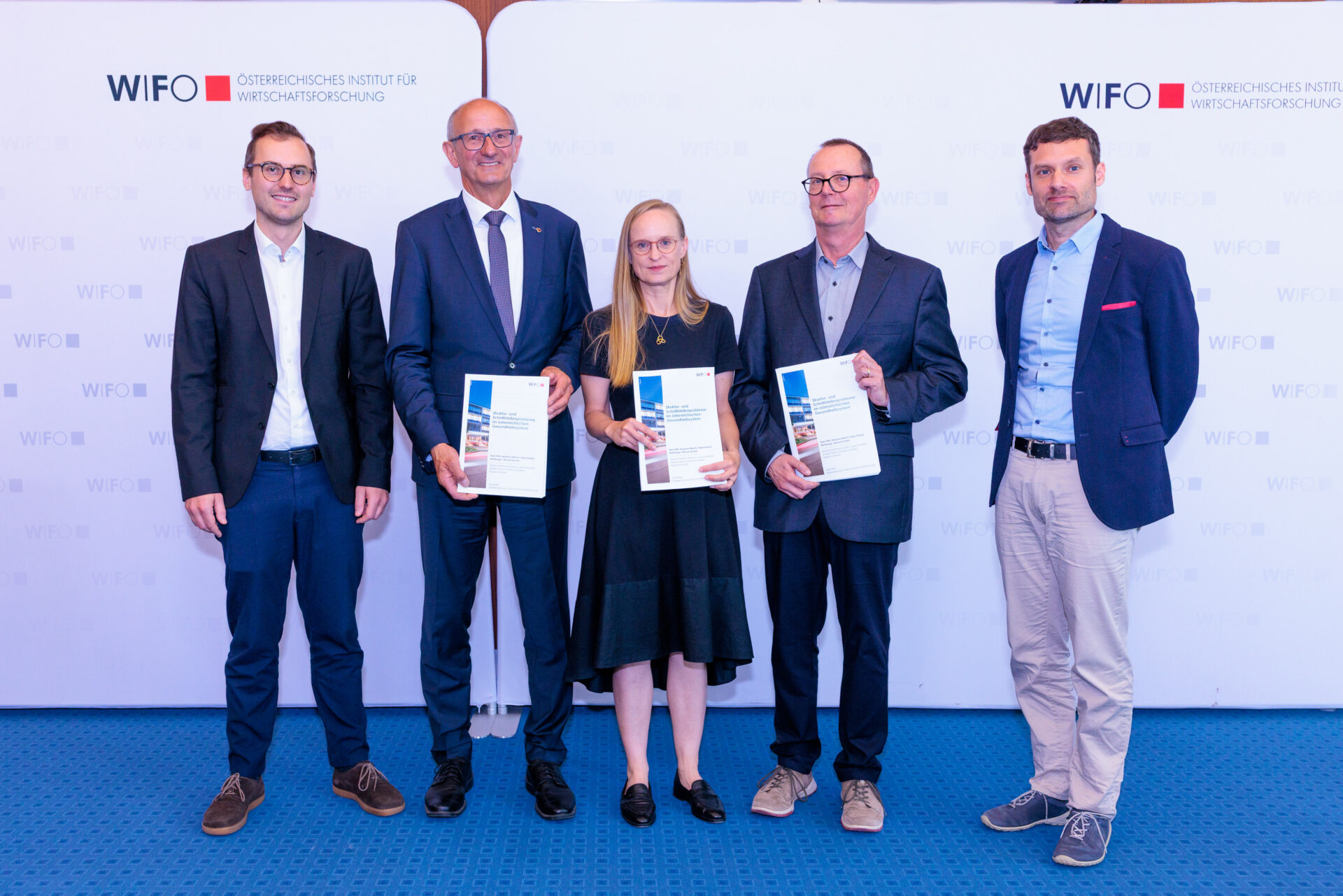
The study by Hans Pitlik, Benjamin Bittschi, Ulrike Famira-Mühlberger, and Manuel Zerobin, commissioned by the Conference of Provincial Finance Councillors, also examines empirically how regional changes in physician supply affect the use of inpatient services. The findings show that improved access to office-based medical care does not automatically lead to lower hospital utilisation. Strengthening outpatient care alone is therefore not necessarily sufficient to reduce demand for hospital services. At the same time, the analysis shows that districts with a higher density of general practitioner services tend to have fewer avoidable hospitalisations.
Primary health care utilities (PHCU) can, however, provide measurable relief for hospitals, particularly by reducing the number of inpatient days associated with avoidable hospitalisations. For acute conditions, this effect is mainly driven by shorter lengths of stay, while for chronic conditions the relieving effect emerges with a time lag. The effects are particularly pronounced in PCHUs that have been established for a longer period.
Publications
Please contact

Further news