The Economy Defies the Energy Price Shock
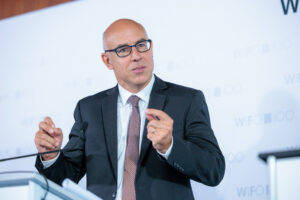
"The labour market is stabilising at a low level: seasonally adjusted, the number of unemployed fell in October 2026 compared with the previous month for the first time since July. Unemployment continues to rise sharply amongst older persons and the long-term unemployed," said Stefan Schiman-Vukan, author of the latest WIFO Business Cycle Report.
The international environment continues to be shaped by the war between the USA, Israel and Iran. Attacks on ships in the Strait of Hormuz caused crude oil and natural gas prices to rise sharply once again in autumn. Nevertheless, the global economy continued to expand: in the USA, GDP grew significantly, driven by private consumption and investment in artificial intelligence. In the euro area, industrial confidence reached a multi-year high, while in China, exports supported economic activity. In Germany, ifo business climate recently improved for the sixth time in a row.
At the same time, inflation in the USA and the euro area is again picking up noticeably, which prompted central banks to raise key interest rates in September. In October, the Federal Reserve (Fed) and the European Central Bank (ECB) left key interest rates unchanged, but kept the door open to further increases. Long-term interest rates have risen significantly in financial markets, and doubts about the AI boom are growing.
Austria's economy grew by 0.2 percent in the third quarter of 2026 compared with the previous quarter and by 0.6 percent compared with the same quarter of the previous year (WIFO flash estimate, seasonally and calendar-adjusted). This expansion was driven by a positive contribution from net exports and the services sector. Investment rose only slightly, while private consumption stagnated and public consumption and value added in construction contracted. The recovery in manufacturing continued.
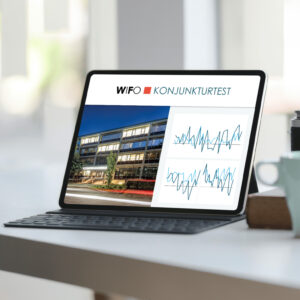
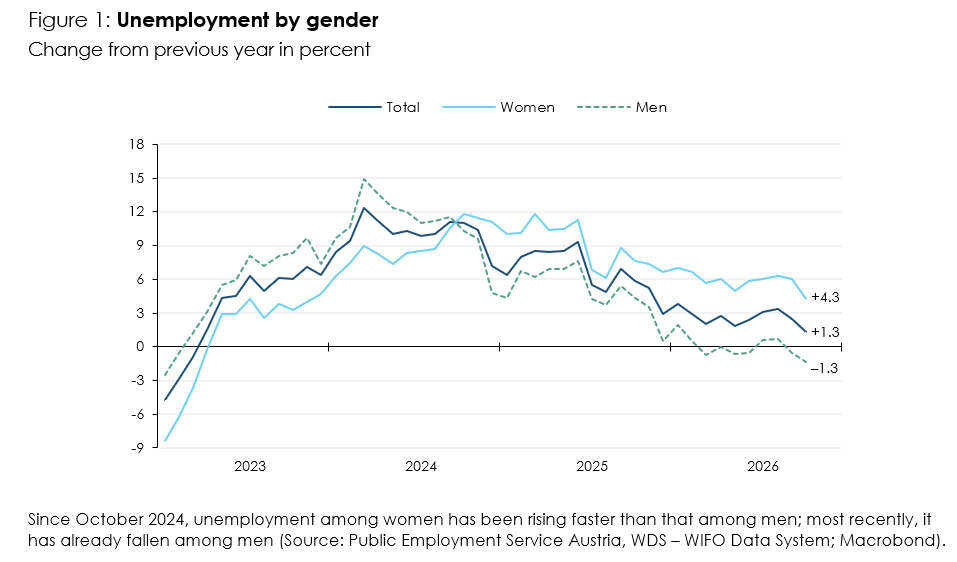
According to the WIFO-Konjunkturtest (business cycle survey), business sentiment turned slightly positive in October for the first time since January 2026, after having slumped in April with the energy price shock. Assessments of total order backlogs improved particularly among manufacturing companies. Consumer confidence, by contrast, remains low. Inflation (as measured by the Consumer Price Index, CPI) stood at 3.6 percent year-on-year in October, according to a flash estimate by Statistics Austria, and was thus unchanged from September. Employment rose slightly in October compared with the same month last year, while the number of unemployed increased only marginally. The seasonally adjusted unemployment rate stood at 7.7 percent. Employment and unemployment continue to rise sharply amongst older persons, primarily because the gradual increase in the retirement age for women is keeping them in the labour force for longer.
Please contact

Further news