Industry Drives the Recovery, Energy Prices Dampen Purchasing Power
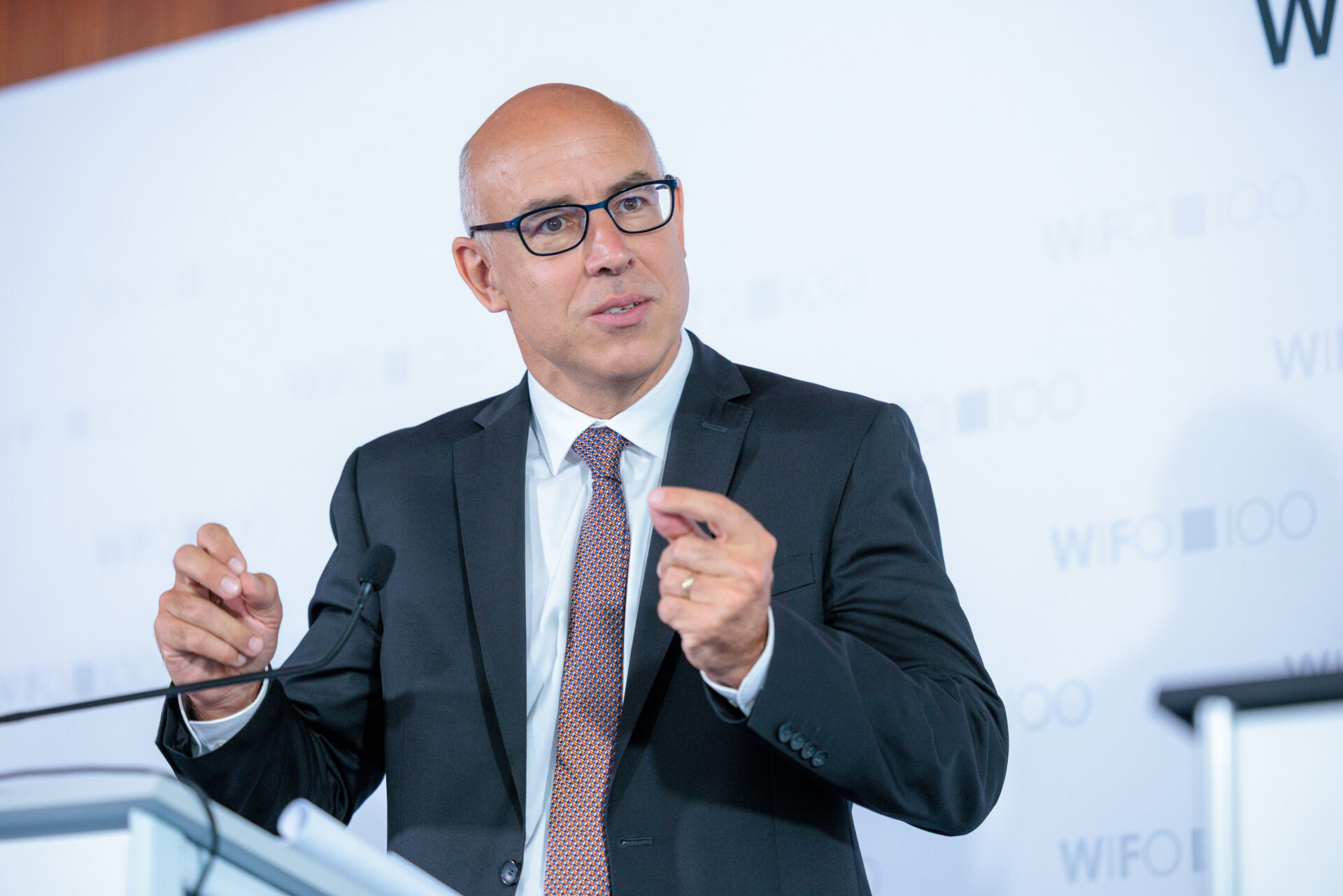
"In 2026, industry will replace the public sector as the main driver of growth; however, the future development of industrial value added depends on external demand and energy prices," says Christian Glocker, one of the authors of the current WIFO Economic Outlook.
Following the prolonged period of weakness in 2023 and 2024, the Austrian economy is in a tentative recovery, the nature of which is set to change fundamentally in the current year. Up until 2025, growth was largely driven by the public administration, education and health sector, whose contribution is now declining significantly. This is being replaced by industry (manufacturing, NACE 2008, section C), which is benefitting from a noticeable pick-up in foreign demand. At the same time, a renewed supply shock is weighing on the economy: the war in the Middle East and the ongoing blockade of the Strait of Hormuz have caused prices for crude oil, natural gas and electricity to rise sharply. Unlike in 2022, this shock is hitting the domestic economy at a time of already weak purchasing power and a restrictive stance of economic policy.
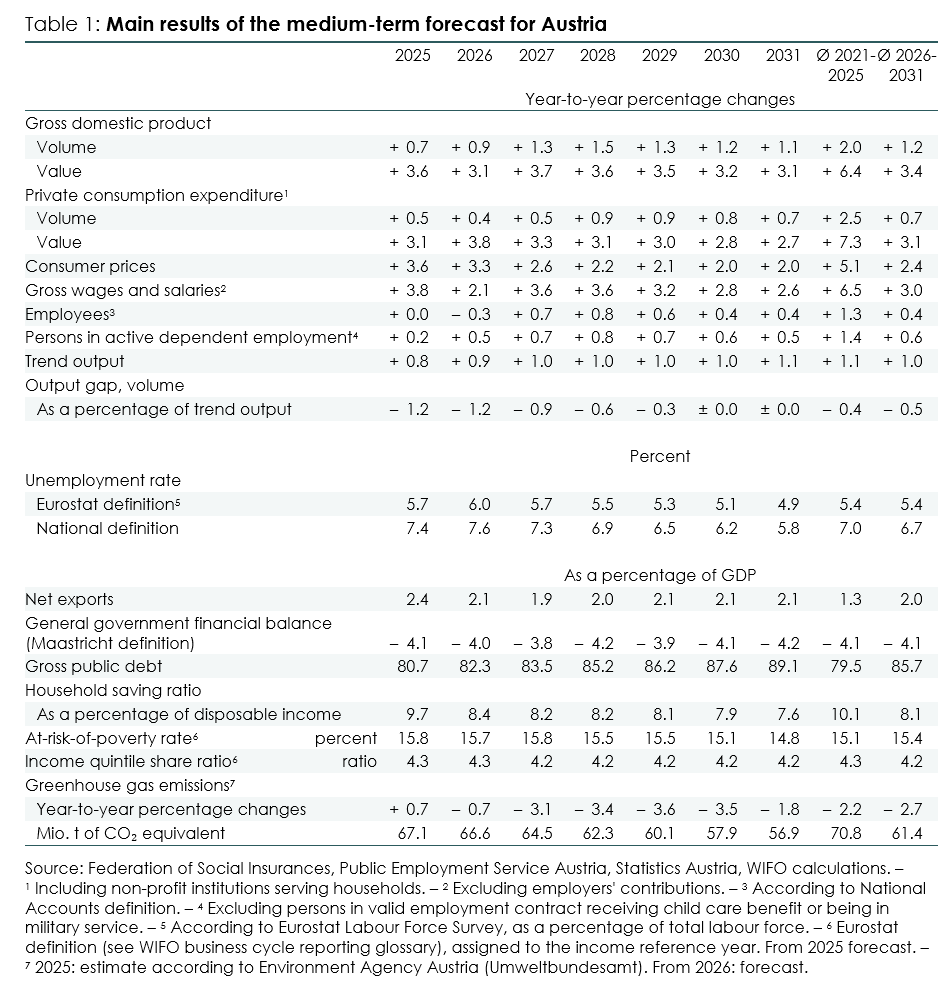
For 2026, WIFO expects economic output to grow by 0.9 percent, driven by exports (+2.3 percent), which are picking up in line with the industrial cycle in the key export markets. This stimulus is being transmitted to domestic demand only gradually, via production and income: private consumption will continue to grow at a weak rate (+0.4 percent), as real wages fall and increased uncertainty dampens households' willingness to spend.
In 2027, real GDP growth is expected to accelerate to 1.3 percent, as the external stimulus should then feed through more strongly to domestic demand: construction investment will rise in 2027 for the first time in five years, investment in machinery and equipment will continue to expand and gross real wages per capita will grow slightly again. However, the tightening of monetary policy and ongoing fiscal consolidation will dampen growth momentum throughout the forecast period.
Domestically produced goods and services will become 2.2 percent more expensive in 2026 and 2.4 percent more expensive in 2027 (2025 +3.0 percent). The GDP deflator thus understates the inflationary pressure faced by private households, as the rising cost of imported energy sources increases consumer prices but not the price of domestic value added. Consumer prices will rise by 3.3 percent in 2026 and by 2.6 percent in 2027 (2025 +3.6 percent). With the assumed easing on energy markets, price pressures will abate towards the end of the forecast period.
The labour market responds to the economic recovery with a delay. The number of persons in active dependent employment will rise by 0.5 percent in 2026 and by 0.7 percent in 2027. As labour supply continues to grow, driven primarily by immigration, the unemployment rate (national definition) will rise to 7.6 percent in 2026 and will fall only in the following year, to 7.3 percent.
Medium-term Forecast
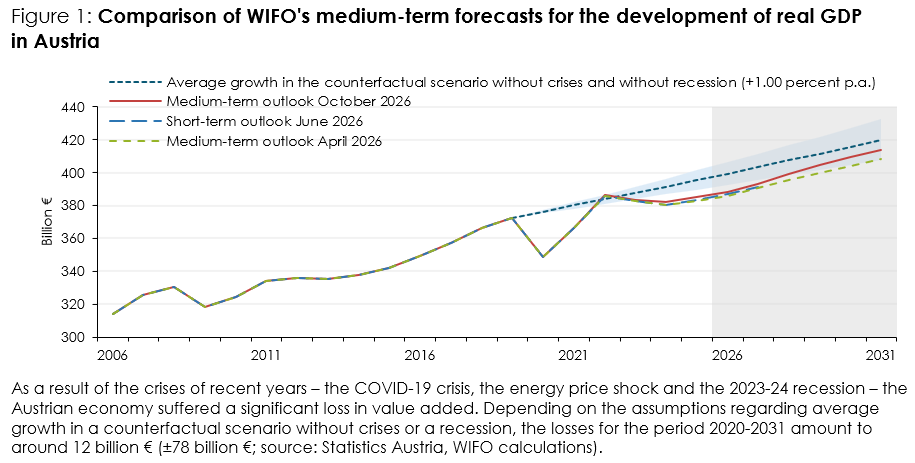
In the medium term, the Austrian economy faces several challenges. For instance, energy prices and unit labour costs remain high despite the recent convergence towards the European average. As a result, especially the energy-intensive export sector continues to face considerable competitive pressure. The labour force participation rate among older persons has risen with the gradual increase in the statutory retirement age for women and the option to take early retirement later, but it remains lower than in comparable industrialised countries. Furthermore, structural problems persist regarding the integration of migrants into the education system and the labour market. Against this backdrop, the Austrian economy is likely to grow more slowly than the euro area average in the medium term. WIFO expects real GDP growth of 1.2 percent p.a. (2026-2031; Ø 2010-2019 +1.6 percent p.a.).
In view of demographic ageing, greater efforts must be made to harness the employment potential in the future, not only of older workers but also of the unemployed. If this is achieved, the unemployment rate could fall to 5.8 percent by 2031.
For 2028-29, WIFO expects gross real wage growth to rise significantly once again. Inflation is not expected to reach the ECB's 2 percent target until the second half of 2028 and is likely to remain at that level in the subsequent period.
The general government budget deficit will average 4.1 percent of nominal GDP in 2026-2031, remaining well above the 3 percent threshold even in the medium term. Consequently, public debt will rise to 89 percent of nominal economic output by 2031. The rise in long-term interest rates is leading to a noticeably higher interest burden on the national debt and is undermining previous consolidation efforts. In order to meet or fall below the 3 percent Maastricht target, additional consolidation efforts of at least 1 percent of the value of GDP will be required from 2029 onwards.
Publications
Please contact