
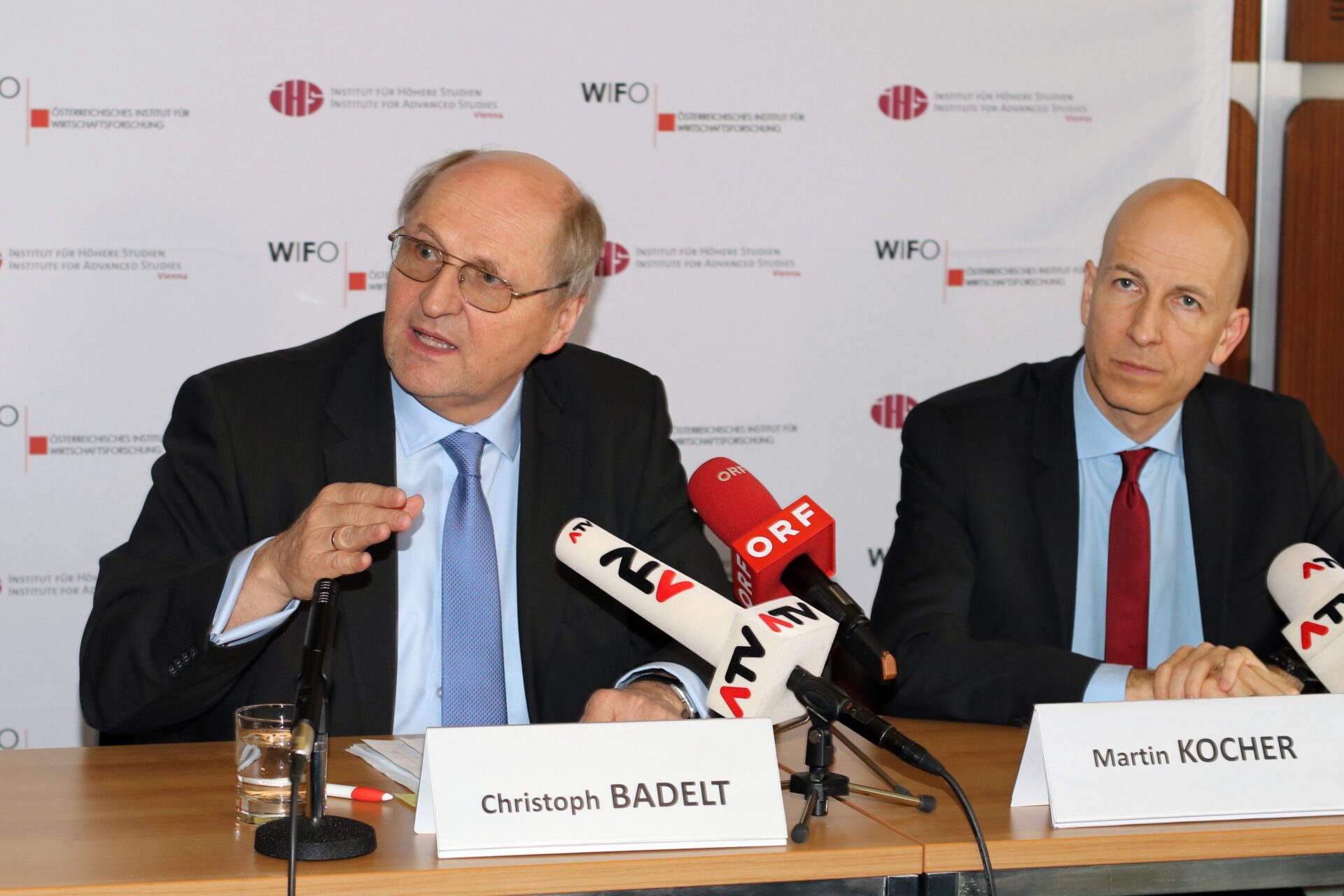
24.03.2017
Economic Outlook for 2017 and 2018: Business Cycle Upswing in Austria
Apart from lively internal demand, foreign trade will rebound and contribute more strongly to GDP growth than in recent months.
From a rate of growth of 1.5 percent in 2016, demand and output in Austria are expected to accelerate significantly in 2017 and 2018. Leading indicators clearly suggest a further strengthening of business activity. In this environment, the Austrian economy is expected to expand by 2.0 percent in the current year and 1.8 percent in 2018.
Austria's economy is enjoying a period of cyclical upswing. Support comes from domestic demand, driven by favourable labour market developments. Exports pick up in step with strengthening aggregate demand on foreign markets. Growth of the US economy is set to edge up notably in 2017, while activity in the euro area should stay on a firm upward path. With prices for raw materials rising on world markets, growth in commodity-exporting countries should regain momentum. Hence, exports should provide a distinctly stronger contribution to Austria's GDP growth than in recent periods, thereby supporting the healthy pace of domestic demand forces.
In this environment of a broad-based upward trend across demand components on the one hand and production across sectors on the other, business activity in Austria is bound to gather momentum. The favourable signs from forward-looking indicators also confirm the prospect of a sustained cyclical upturn over the entire forecast horizon. In the event, real GDP will gain 2.0 percent in the current year and 1.8 percent in 2018, exceeding in both years the rate of potential output growth. While overall productive capacity will likely be extended with the increase in demand and output, the output gap will still be negative by the end of 2018. The implicit dampening impact on inflation should nevertheless ebb and upward pressure on prices may gradually mount. After an annual increase of 0.9 percent in 2016, the consumer price index (CPI) is projected to climb by 1.7 percent each in 2017 and 2018. Oil price volatility remains a risk, notably for the inflation outlook, which is nevertheless deemed balanced, much as the risks to the overall growth forecast.Public finances stand to benefit from lively economic activity and lower debt service cost, but the improvement in the fiscal balance is held back by a moderately expansionary policy stance. As the latter will gradually abate, 2017 and 2018 should see steady progress in deficit reduction. While the cyclical upswing will stimulate employment growth, the sustained expansion of labour supply will allow the jobless rate to fall only slightly this year and no further in 2018.
In this environment of a broad-based upward trend across demand components on the one hand and production across sectors on the other, business activity in Austria is bound to gather momentum. The favourable signs from forward-looking indicators also confirm the prospect of a sustained cyclical upturn over the entire forecast horizon. In the event, real GDP will gain 2.0 percent in the current year and 1.8 percent in 2018, exceeding in both years the rate of potential output growth. While overall productive capacity will likely be extended with the increase in demand and output, the output gap will still be negative by the end of 2018. The implicit dampening impact on inflation should nevertheless ebb and upward pressure on prices may gradually mount. After an annual increase of 0.9 percent in 2016, the consumer price index (CPI) is projected to climb by 1.7 percent each in 2017 and 2018. Oil price volatility remains a risk, notably for the inflation outlook, which is nevertheless deemed balanced, much as the risks to the overall growth forecast.Public finances stand to benefit from lively economic activity and lower debt service cost, but the improvement in the fiscal balance is held back by a moderately expansionary policy stance. As the latter will gradually abate, 2017 and 2018 should see steady progress in deficit reduction. While the cyclical upswing will stimulate employment growth, the sustained expansion of labour supply will allow the jobless rate to fall only slightly this year and no further in 2018.
Further news
Economic Outlook for 2026 and 2027
14.10.2026

Research Group Climate, Environmental and Resource Economics
08.10.2026

European Construction Market Forecasts to 2029 – "Understanding What Moves the Market"
02.10.2026

Responsible for Research – Rotation as of 1 October 2026
01.10.2026

Video: Research Seminar with Philipp Schmidt-Dengler
29.09.2026
Results of the WIFO-Konjunkturtest (Business Cycle Survey) of September 2026
29.09.2026

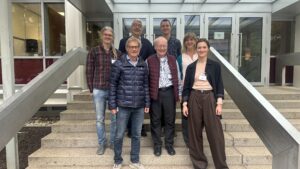
Video: Research Seminar with Hans Koster
25.09.2026
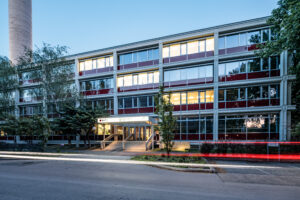

80 Years of Social Partnership and 100 Years of WIFO
17.09.2026
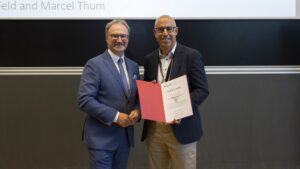
German Economic Association – Verein für Socialpolitik Honours WIFO Director
15.09.2026
WIFO Business Cycle Report of September 2026
09.09.2026

A Pioneer, She Was the First Woman to Obtain a Doctorate in State Sciences at the University of Vienna and Was Most Likely Gustav Klimt's "Fräulein Lieser"
07.09.2026

A Film Portrait of the World-Renowned Doyen of Austrian Economics
07.09.2026

Franz Nemschak in His Own Words About the Re-establishment of WIFO in 1945
07.09.2026
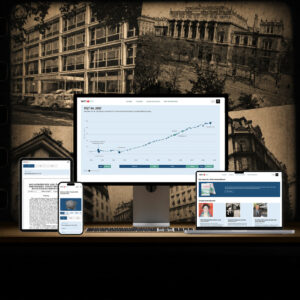
Anniversary Portal Featuring a Timeline, Memories and Archives
07.09.2026
Results of the WIFO-Konjunkturtest (Business Cycle Survey) of August 2026
28.08.2026

The Recent WIFO Research Brief provides preliminary Assessments of the Support Measures and Looks to the Future
26.08.2026

Retail Business Cycle Report in Cooperation with the Austrian Retail Association
24.08.2026

WIFO Economist Writes her Doctoral Thesis in Berkeley, Paris and Vienna
12.08.2026

WIFO Business Cycle Report of August 2026
11.08.2026

Tourism Expert Worked at the Austrian Institute of Economic Research for 41 Years
11.08.2026