Is Federalism Reformable?
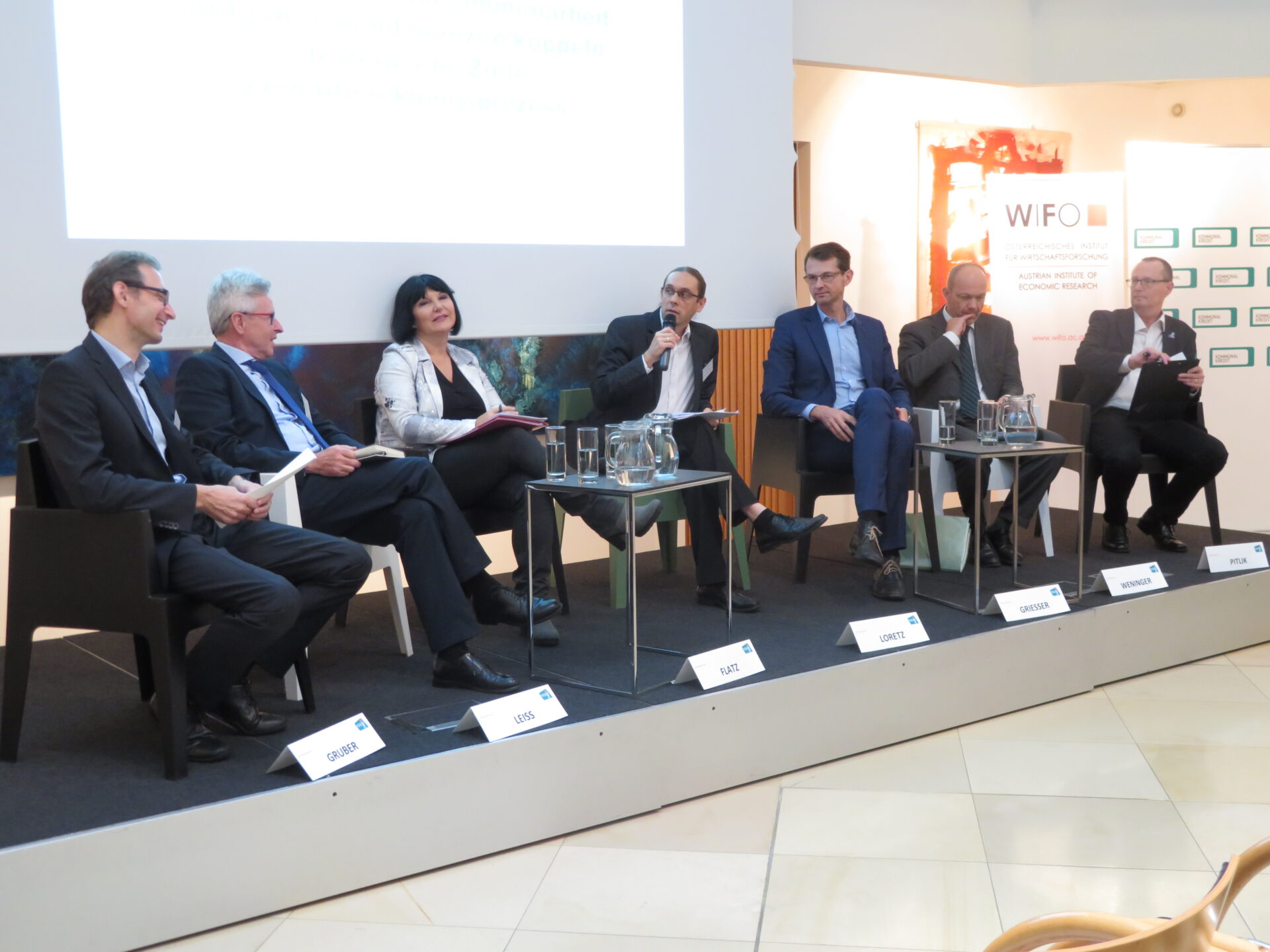
Cooperation in the Austrian federal state – usually referred to as "cooperative federalism" – is complex because of the numerous tasks shared between the various federal levels. Political agreements are often shaped by the various interests of the federal, provincial and local governments. At the same time, they are often dependent on each other for the provision of services. The problem of multiple interdependencies is particularly evident in joint tasks such as social agendas or education: in some cases, there is mistrust between the federal levels, different interests lead to compromises and are reduced to the lowest common denominator, which can contribute little to solving the urgent, mostly complex questions of the future. This was the starting point of this year's WIFO-KDZ Workshop on federalism issues, which took place on 13th November at the Kommunalkredit Austria and met with lively interest from representatives from politics, administration and science.
Peter Biwald, Managing Director of KDZ, also stressed coordination problems between the actors, as missing, uncoordinated objectives lead to a backlog of reforms. The existing federal system is therefore in urgent need of reform. A strategic approach to improved cooperation that has received much international attention is multi-level governance, as Claire Charbit of the OECD explained.
Another concrete aspect is the merging of task and financing responsibilities, according to Hans Pitlik, fiscal federalism expert at WIFO. Subnational tax autonomy is not only a central prerequisite for a better alignment of task, expenditure and financing responsibilities. A lack of tax autonomy also increases the probability of political blockades. For example, tax policy decisions regarding the shared federal taxes, which are supposedly only to be taken by the federal government, become complex. For this reason, in addition to the unbundling of tasks, an extended revenue responsibility of the subnational levels is also necessary.
Read an interview with Claire Charbit (OECD) in "Die Presse"
Please contact

Further news