Rebound in the Third Quarter of 2020: GDP Growth of 11.1 Percent
Important Information
Starting with the end of September 2020, the Quarterly National Accounts are calculated and published by Statistics Austria. The WIFO Flash Estimate is based on this calculation and provides an estimate for the following quarter. This estimate includes GDP as well as some important components in the form of seasonally and working-day adjusted figures as changes compared to the previous quarter (key figure according to Eurostat specifications).
The figures presented in this calculation are first estimates and as such are subject to uncertainties and possible revisions.
On 30 November 2020, Statistics Austria will publish the quarterly GDP and results for its components for the third quarter of 2020 on the basis of more complete data.
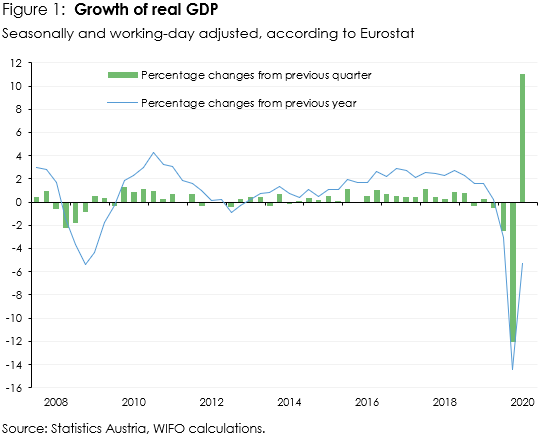
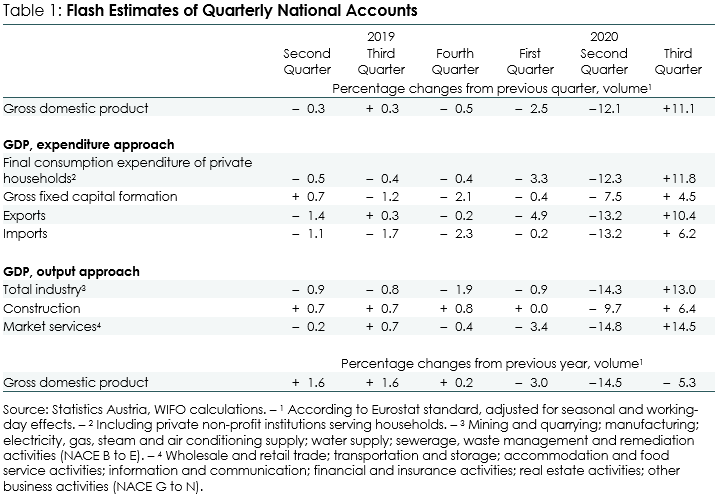
After the slump in the second quarter of 2020 (–12.1 percent), a significant increase in Austrian economic output compared to the previous quarter was recorded, as expected. According to first calculations, GDP in the third quarter of 2020 rose by 11.1 percent compared to the previous period (key figure according to Eurostat). Thus, the domestic economic output calculated in this way was 5.3 percent below the previous year's quarter. The declines in overall economic value added triggered by the consequences of the COVID-19 pandemic could not be fully offset by the current positive development in the third quarter.
The following components of GDP show a similar picture: value added in industry (NACE B to E) rose by 13 percent in the third quarter (after –14.3 percent in the second quarter), and by 6.4 percent in the construction sector (after –9.7 percent). Market services, which consist mainly of trade, transportation and accommodation and food service activities and other business services, which were strongly affected by the crisis, recorded a significant increase in the third quarter: +14.5 percent, after –14.8 percent in the second quarter. This was also reflected in strong growth of household final consumption (including private non-profit institutions serving households) due to catching-up effects (+11.8 percent after –12.3 percent in the second quarter).
The development of investment demand was somewhat slower. Gross fixed capital formation increased by 4.5 percent (second quarter of 2020 –7.5 percent). The external sector was also marked by a recovery, with exports up 10.4 percent (after –13.2 percent) and imports up 6.2 percent (after –13.2 percent).
Publications
Please contact

Further news