"A Creation of the Post-War Era"
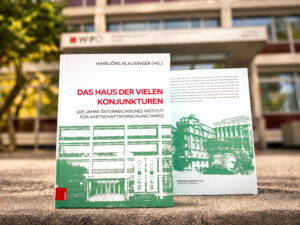
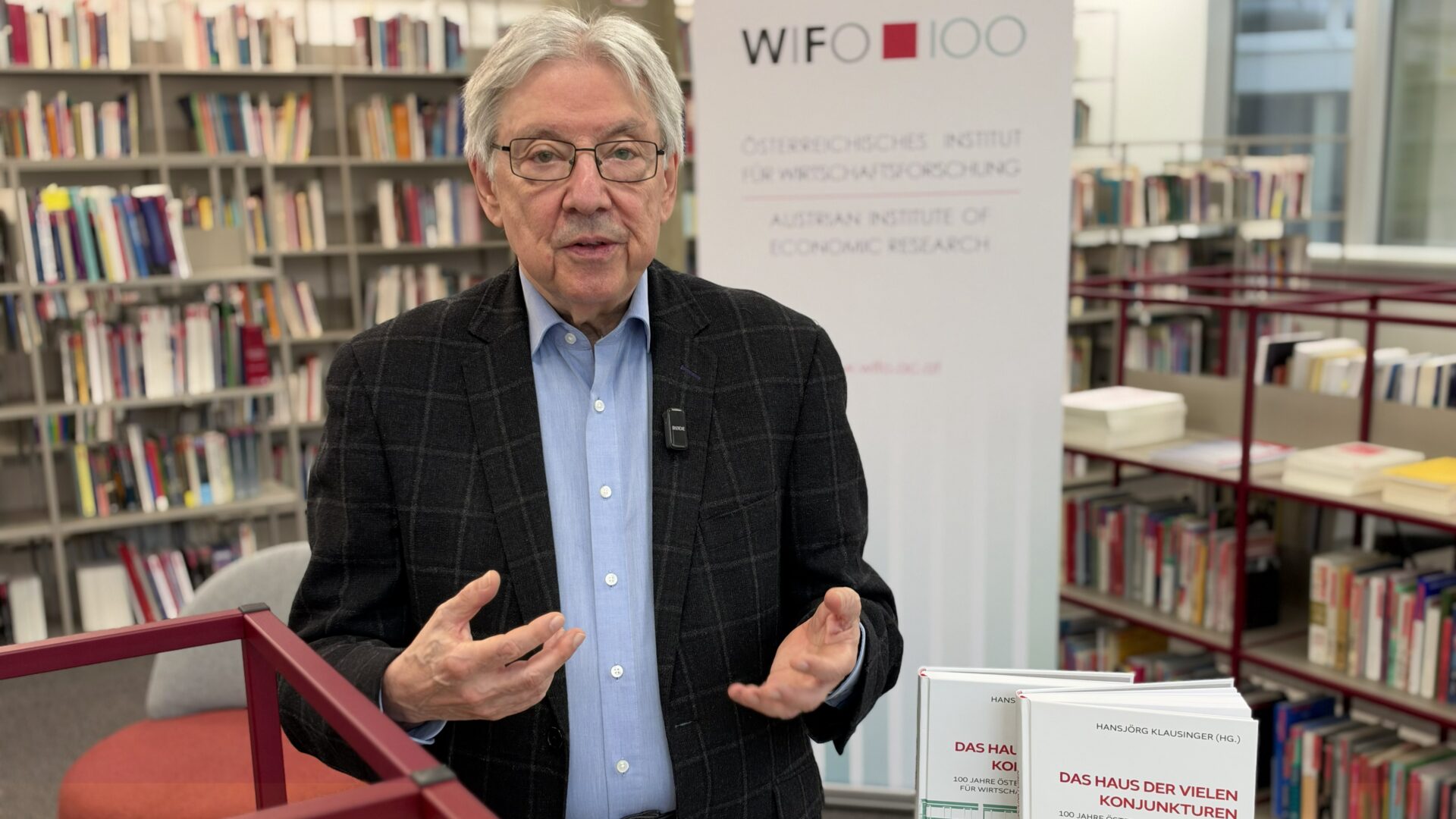
WIFO may look back on a hundred years of history. According to Klausinger, however, it only gained its present position in the political system after 1945: as an institution that the public perceives as independent and as part of the checks and balances of a liberal democracy. "I am very optimistic that every reader will learn a great deal they did not know before," says the editor.
Filling a blind spot
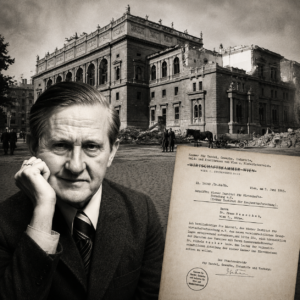
The volume sheds light on the institute's Nazi era, which has so far received little research attention. Gunnar Take's contribution shows that WIFO continued its empirical work, but its results now served the criminal aims of the regime. According to Klausinger, this has so far been neglected in WIFO's culture of remembrance. "WIFO was a cog in a totalitarian machine, and no one involved in it could escape with clean hands."
From the back room to the public stage
The institute's understanding of its own role has also changed fundamentally. Founding director Friedrich August von Hayek largely refrained from offering economic policy advice or criticism. His successor Oskar Morgenstern voiced criticism only anonymously and advised policymakers behind the scenes. Under the censorship of Austrofascism, open criticism would hardly have been possible anyway.
This changed after 1945 under Franz Nemschak. Post-war reconstruction needed economic research, and for a long time WIFO had virtually no competition. Nemschak was also far more visible in public than his predecessors. His annual speeches became media events, as WIFO's forecasts later would. According to Klausinger, this had a lasting impact on how the institute was perceived.
Keeping issues on the agenda
WIFO's achievements should not be measured solely by whether policymakers act on its advice, Klausinger says. "It is already a great achievement when certain issues are kept in the public debate." He cites European integration as an example. From the early 1950s onwards, WIFO argued for it, first for the European Community, then for EFTA and finally for the EU. In the end, a decisive factor was the well-founded, positive assessment of EU accession by Helmut Kramer, then head of WIFO.
About the editor
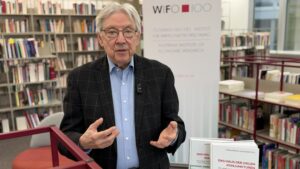
Hansjörg Klausinger taught economics as an associate professor at WU Vienna University of Economics and Business. He was a research fellow at Harvard University in 2001-02 and at Duke University in 2008. His research focuses on the history of economic thought in the 20th century, in particular the Austrian School of Economics. Most recently, in 2022, he published the first part of a biography of Friedrich August von Hayek ("Hayek: A Life, 1899-1950", co-authored with Bruce Caldwell).
Further news