
© pixabay.com
29.06.2017
Strong Stimulus from World Trade Fuelling Economic Activity in Austria
In spite of GDP growth projected at a solid 2.4 percent in 2017 and 2.0 percent in 2018, unemployment will likely remain rather high.
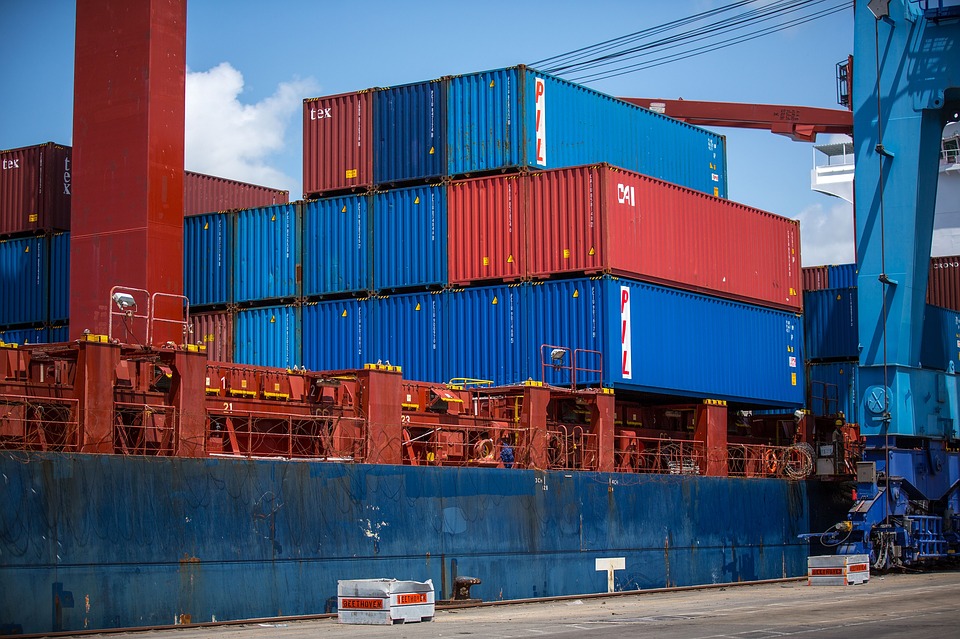
The acceleration of world trade growth originating from East Asia has reached Austria. In addition, exports benefitted from clearing the investment backlog in East-Central Europe. While the external stimulus may ease somewhat in 2018, private consumption will continue to provide firm support to business activity.
In early 2017, Austria's GDP growth recorded the highest rate in six years, benefitting from a benign combination of external factors. First, China's demand for imports has picked up since 2016, which provided stimulus not only to its East Asian neighbours and commodity exporters like Russia, but also to advanced economies like Austria (mainly via supplies to German companies), since domestic manufacturers of machinery and other investment goods are closely integrated into global value chains. Second, the investment backlog in East-Central Europe caused by delays in the disbursement of EU subsidies in 2016, is gradually being cleared. Indeed, Austrian exports are currently advantaged on several fronts, as investment in early 2017 has rebounded strongly also in the USA, with positive repercussions for Austrian manufacturers.
These benign incentives are expected to last for the remainder of the current year, as companies are highly satisfied with their current business situation and optimistic for the months to come. Beyond 2017, investment behaviour in East-Central Europe should return to normal, and policy in the USA looks set to favour tax cuts rather than embarking on large-scale investment projects. It is also doubtful whether the investment boom in China will continue; information received in recent months suggests that the momentum of world trade has weakened. For this reason, the pace of growth in Austria is expected to decelerate over the forecast period.
Overall, demand and output will nevertheless remain on a firm upward path in 2018, thanks to robust domestic demand. Although the stimulating effects of the tax cuts on private consumption are wearing off, the decline in unemployment will strengthen disposable income and demand of private households. It would nevertheless be too soon to sound the all-clear for the labour market, since the bulk of the newly created jobs will not be filled by the domestic labour reserve. The inflow of foreign workers is unabated notably from those East-Central European countries for which access to the Austrian labour market has been liberalised in 2011 and 2013. Older and low-qualified jobseekers remain longer on the unemployment register and add to the structural component of unemployment.
The general government deficit will turn out significantly lower in 2017 than last year. Major reasons are higher GDP growth, one-off factors related to the tax reform (anticipation effects 2015 which dampened capital gains tax revenues in 2016) and to retirement benefits (lumpsum payment of 100 € per head in 2016), the phasing out of subsidies for banks in distress, and a further decline in debt service cost. On the revenue side, the fiscal stance remains expansionary in 2017, since part of the tax cuts have taken effect only this year and the employers' contribution to the Family Benefit Fund has been lowered. For 2018, a major uncertainty relates to the general election carried forward to October 2017; it is likely that, in the first instance, a provisional budget will extrapolate current expenditure trends.
The forecast risks for GDP growth are on balance upward bound. The "Initiative 20,000" could make a contribution towards reducing structural unemployment, while the "Employment Bonus" may trigger additional investment. Moreover, the positive stimulus to foreign trade may last longer than assumed in the projection. On the other hand, the global situation holds a number of downside risks, such as the "Brexit" negotiations or the high stock market values worldwide, where a downward correction may unsettle the fragile European financial sector. Looming military conflicts in the Middle East pose a risk to oil prices since Iran is in control of large parts of daily crude oil shipments.
These benign incentives are expected to last for the remainder of the current year, as companies are highly satisfied with their current business situation and optimistic for the months to come. Beyond 2017, investment behaviour in East-Central Europe should return to normal, and policy in the USA looks set to favour tax cuts rather than embarking on large-scale investment projects. It is also doubtful whether the investment boom in China will continue; information received in recent months suggests that the momentum of world trade has weakened. For this reason, the pace of growth in Austria is expected to decelerate over the forecast period.
Overall, demand and output will nevertheless remain on a firm upward path in 2018, thanks to robust domestic demand. Although the stimulating effects of the tax cuts on private consumption are wearing off, the decline in unemployment will strengthen disposable income and demand of private households. It would nevertheless be too soon to sound the all-clear for the labour market, since the bulk of the newly created jobs will not be filled by the domestic labour reserve. The inflow of foreign workers is unabated notably from those East-Central European countries for which access to the Austrian labour market has been liberalised in 2011 and 2013. Older and low-qualified jobseekers remain longer on the unemployment register and add to the structural component of unemployment.
The general government deficit will turn out significantly lower in 2017 than last year. Major reasons are higher GDP growth, one-off factors related to the tax reform (anticipation effects 2015 which dampened capital gains tax revenues in 2016) and to retirement benefits (lumpsum payment of 100 € per head in 2016), the phasing out of subsidies for banks in distress, and a further decline in debt service cost. On the revenue side, the fiscal stance remains expansionary in 2017, since part of the tax cuts have taken effect only this year and the employers' contribution to the Family Benefit Fund has been lowered. For 2018, a major uncertainty relates to the general election carried forward to October 2017; it is likely that, in the first instance, a provisional budget will extrapolate current expenditure trends.
The forecast risks for GDP growth are on balance upward bound. The "Initiative 20,000" could make a contribution towards reducing structural unemployment, while the "Employment Bonus" may trigger additional investment. Moreover, the positive stimulus to foreign trade may last longer than assumed in the projection. On the other hand, the global situation holds a number of downside risks, such as the "Brexit" negotiations or the high stock market values worldwide, where a downward correction may unsettle the fragile European financial sector. Looming military conflicts in the Middle East pose a risk to oil prices since Iran is in control of large parts of daily crude oil shipments.
Further news
German Economic Association – Verein für Socialpolitik Honours WIFO Director
15.09.2026
WIFO Business Cycle Report of September 2026
09.09.2026
Anniversary Portal Featuring a Timeline, Memories and Archives
07.09.2026

A Pioneer, She Was the First Woman to Obtain a Doctorate in State Sciences at the University of Vienna and Was Most Likely Gustav Klimt's "Fräulein Lieser"
07.09.2026

A Film Portrait of the World-Renowned Doyen of Austrian Economics
07.09.2026

Franz Nemschak in His Own Words About the Re-establishment of WIFO in 1945
07.09.2026
Results of the WIFO-Konjunkturtest (Business Cycle Survey) of August 2026
28.08.2026

The Recent WIFO Research Brief provides preliminary Assessments of the Support Measures and Looks to the Future
26.08.2026


Retail Business Cycle Report in Cooperation with the Austrian Retail Association
24.08.2026

WIFO Economist Writes her Doctoral Thesis in Berkeley, Paris and Vienna
12.08.2026

WIFO Business Cycle Report of August 2026
11.08.2026

Tourism Expert Worked at the Austrian Institute of Economic Research for 41 Years
11.08.2026

Paper by Christian Glocker and Thomas Url in the International Economic Review
10.08.2026
Results of the WIFO-Konjunkturtest (Business Cycle Survey) of July 2026
30.07.2026


WIFO Research Brief Examines Accuracy and Implications for Credit Supply and Construction Activity
03.07.2026

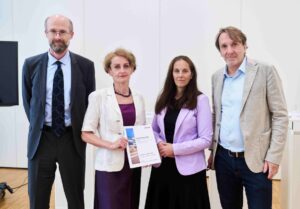
Focus on the Structure of Sick Leave Relating to the Musculoskeletal System and Connective Tissue
30.06.2026

Video: WIFO Senior Economist Margit Schratzenstaller at Budget Hearing of the Austrian Parliament
30.06.2026
Results of the WIFO-Konjunkturtest (Business Cycle Survey) of June 2026
29.06.2026

Keynote Address by WIFO Economist Klaus Friesenbichler
26.06.2026

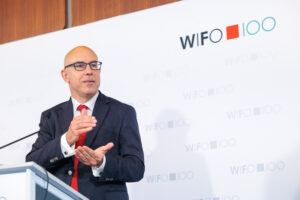
Economic Outlook for 2026 and 2027
25.06.2026