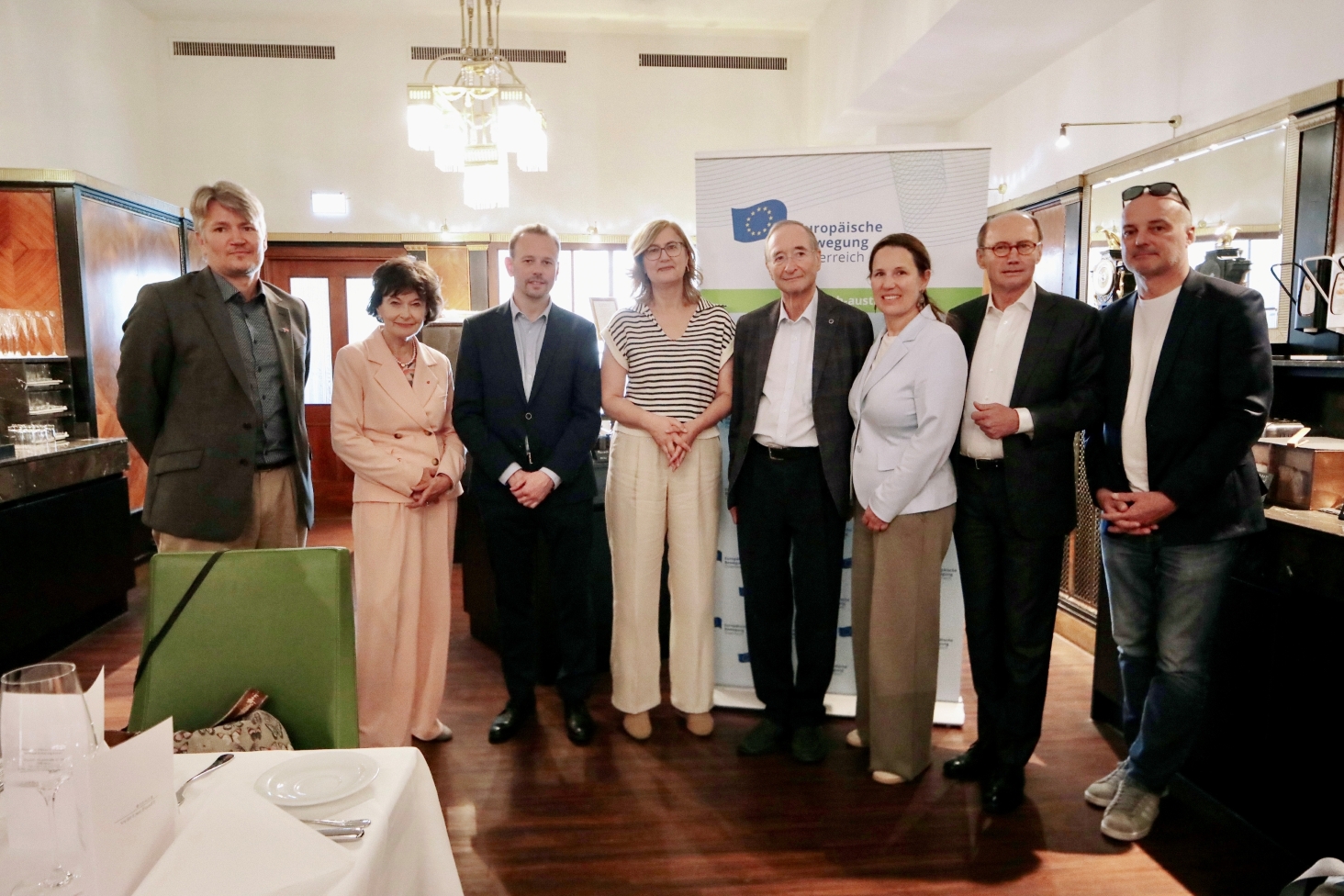
Regulation and European Economic Policy
How much regulation does Europe need, and does it hinder innovation, growth and investment? This question was addressed as part of the "Shaping Europe" series of events organised by the non-partisan civil society organisation, the European Movement Austria (EBÖ). The event was held in partnership with the European Parliament and the Austrian Economic Chamber. Christoph Leitl opened the event in his capacity as EBÖ president. Also in attendance were Othmar Karas, former Vice-President of the European Parliament and President of the European Forum Alpbach, Tim Joris Kaiser from the European Commission, and Barbara Schennach, Head of the European Policy Department at the Austrian Economic Chamber.
Drawing on WIFO studies commissioned by the European Commission and the Federal Chancellery, Friesenbichler outlined the development of European economic policy, characterised by the creation of a legal and regulatory framework. However, this approach is under increasing pressure, both internally from a "multi-speed Europe" and externally from industrial policy initiatives and geopolitical dynamics. One possible response would be to strengthen the single market, which would require harmonising national particular interests. While regulation and bureaucracy are important building blocks of competitiveness, their leverage is limited by the wide range of determining factors within which they are embedded. Furthermore, economic policymakers would need to consider how to balance conflicting objectives in terms of resilience, sustainability, and price efficiency.
Please contact