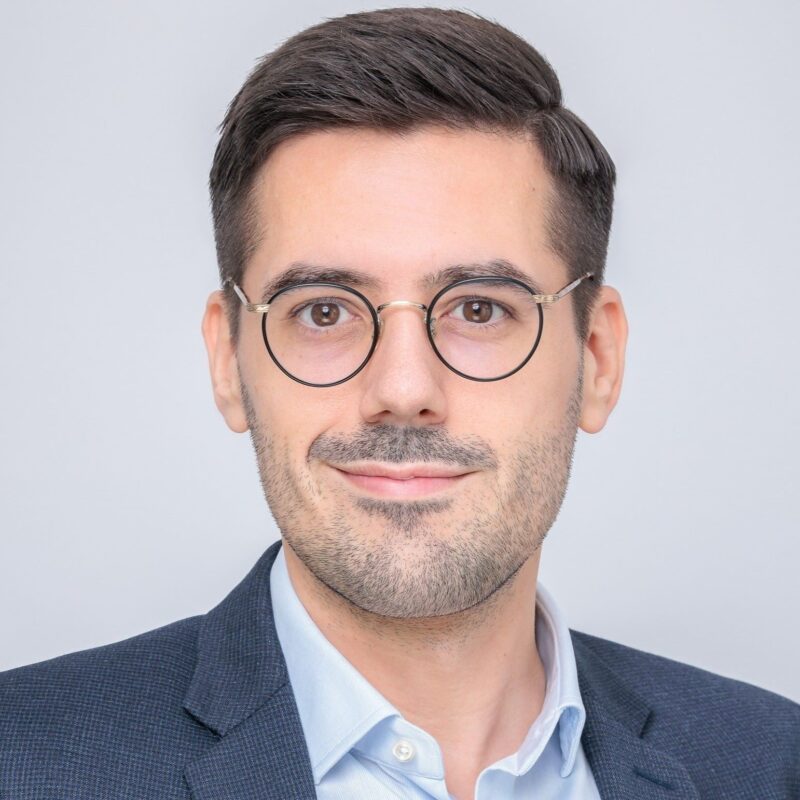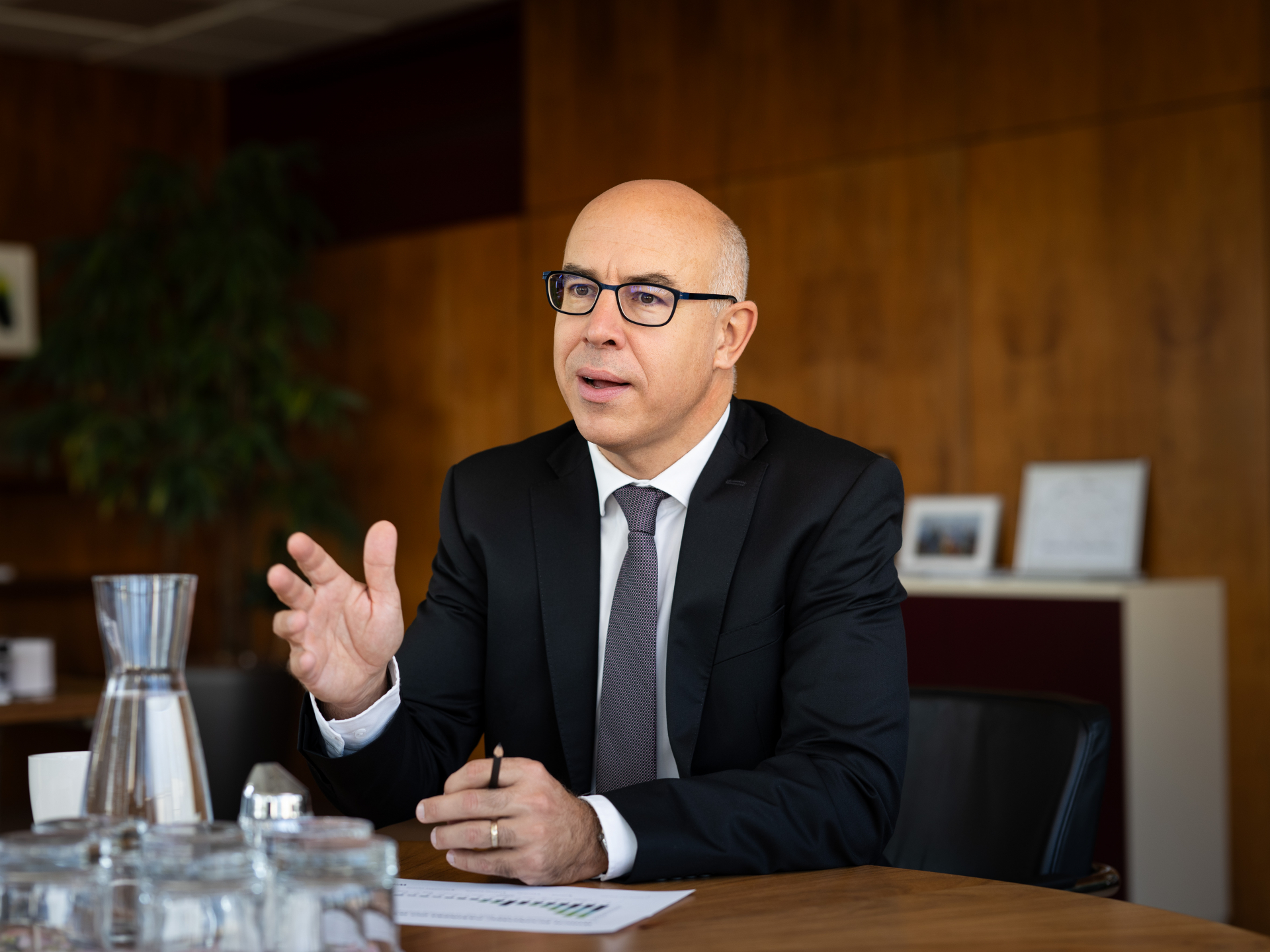
Gabriel Felbermayr Appointed to the German Council of Economic Experts
"The appointment to the renowned and long-established Council of Economic Experts is a great honour – not least because Germany, as the world’s third-largest economy, plays a central role in Europe and beyond", Gabriel Felbermayr said in an initial statement. The official appointment will be made by Federal President Frank-Walter Steinmeier.
Looking beyond national borders and taking European interconnections into account
"The Austrian Institute of Economic Research has always stood for excellent economic expertise and strong international networks. Especially in times of global upheaval, it is crucial to look beyond national borders, to consider European interconnections, and to develop evidence-based solutions for sustainable growth, competitiveness, and social cohesion. I will pursue this commitment in the Council of Economic Experts with full conviction", the WIFO Director stated. Felbermayr has already served on the Scientific Advisory Board of the German Federal Ministry for Economic Affairs and Energy. This membership will now be placed on hold.
Gabriel Felbermayr has been Director of the Austrian Institute of Economic Research (WIFO) in Vienna and university professor at the Vienna University of Economics and Business (WU) since 1 October 2021. Professor Gabriel Felbermayr, PhD, was born in June 1976 in Steyr, Austria. After studying Economics and Trade at the University of Linz, he went to Florence, Italy, to pursue his doctoral studies. From 2004 to 2005, he was an Associate Consultant with McKinsey & Co. in Vienna. From 2005 to 2008, he was Assistant Professor at the University of Tübingen. From 2009 to 2010, he held a chair in International Economics at the University of Hohenheim (Stuttgart). From 2010 to 2019, he led the ifo Center for International Economics at the University of Munich, where he also served as a full professor in International Economics. From 2019 till September 2021 he was President of the Kiel Institute for the World Economy and held a chair in Economics and Economic Policy at Kiel University (CAU). Felbermayr is Chairman of the Statistics Council of the Statistics Austria Federal Institute and Founding President of the "Austria Supply Chain Intelligence Institute" (ASCII).
His research and consulting work focuses on issues of international trade theory and policy, labour market research, European economic integration, and current economic policy issues. He has published a large number of articles in international academic journals, policy briefs, and newspapers. His research has been recognised with several awards.
German Council of Economic Experts
The German Council of Economic Experts is an academic body that advises on economic policy issues. Set up by law in 1963, it is mandated with the task of providing an impartial expert view in the form of periodic assessments of macroeconomic developments in Germany, thus helping economic policymakers and the general public to make informed decisions.
The Council is fully independent in its advisory role and operates in a transparent manner. It describes the current economic situation and its likely future development, highlighting any adverse trends and possible ways of averting or mitigating them. To this end it discusses various indicators of economic output, quality of life, sustainability, and politically defined targets. It also analyses the progress, opportunities and risks of current economic policies and identifies potentially conflicting objectives. The Council’s reports and assessments form a key part of the economic policy debate in Germany and have significantly influenced the political decision-making process.