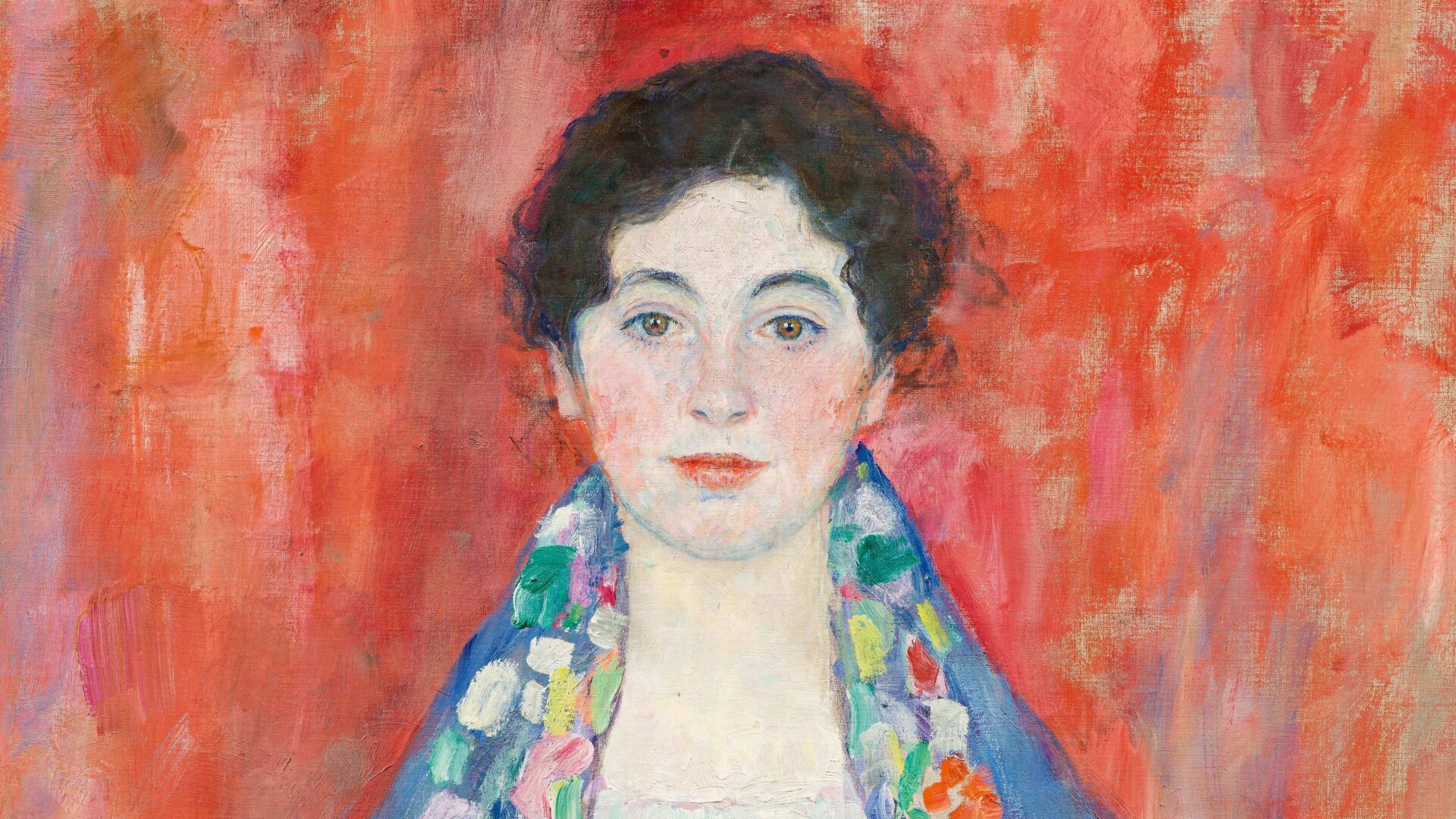
WIFO Co-founder Helene Lieser
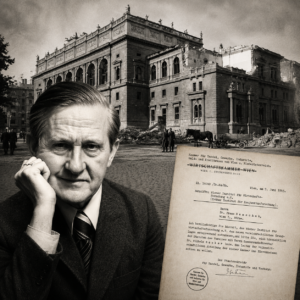
Helene Lieser was born on 16 December 1898 in Vienna to textile manufacturer Julius Lieser and his wife, Henriette Amalie "Lilly" Lieser. She passed her school-leaving examination with distinction in 1916 and began studying philosophy, switching to the Faculty of Law and Political Economy in 1919. In 1920, she submitted her dissertation, "Die währungspolitische Literatur der österreichischen Bankozettelperiode" (The Monetary Policy Literature of the Austrian Banknote Period), under the supervision of Othmar Spann and Ludwig Mises. Not only was Helene Lieser the first woman to be awarded a Dr rer pol degree at the University of Vienna, she also submitted the first political science dissertation in Vienna. She subsequently worked at the "Association of Austrian Banks and Bankers" and was a member of the "National Economic Society" until her expulsion in 1938.
In autumn 1926, she supported the establishment of the Austrian Institute for Business Cycle Research as part of the founding committee. She played an active role on both the Council and the Executive Board until 1937 and regularly attended meetings in her capacity as secretary of the Association of Austrian Banks and Bankers.
Although she had left the Jewish community in 1921, she was forced to emigrate in 1938. Through a marriage of convenience, she obtained Yugoslavian citizenship under the name Berger. While Helene Lieser managed to flee to Geneva, her mother and uncle were murdered in concentration camps. In Switzerland, she collaborated with Mises once more, championing the cause of those persecuted by the Nazis and operating within the "Red Orchestra" spy ring for the Soviet, and later British, secret services.
After the war, she moved to Paris, where she worked for international organisations such as the Organisation for Economic Co-operation and Development (OECD) and the United Nations Educational, Scientific and Cultural Organisation (UNESCO).
Helene Berger-Lieser died shortly after her retirement in Vienna on 20 September 1962.
At a WIFO Research Seminar on 27 November 2024, Rahim Taghizadegan (scholarium) and Herbert Unterköfler spoke about the work and life of the economist Helene Lieser.
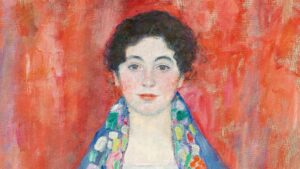
In early 2024, a Klimt work that had been missing for many years was found in Vienna and sold to a buyer in Hong Kong on 24 April for more than 30 million €. Research into its provenance revealed that the subject is most likely Helene Lieser-Berger.
The commission for the portrait was documented as being placed by a member of the Austrian industrialist family, the Liesers. Klimt neither completed nor signed the portrait, which was one of his final works. Following his death in February 1918, the painting passed from his estate to the commissioning family, although it is unclear which branch was involved.
The only known photograph of the portrait dates from 1925 and refers to it as being "in the possession of Mrs Lieser" – given the matching address, it is assumed that this refers to Henriette Amalie "Lilly" Lieser, the mother of Helene and Annie, and a well-known art patron of the time.
Based on current research, she is likely to have commissioned the portrait, which is more likely to depict one of her two daughters than her niece, Margarethe Constance Lieser, who was thought to have been the model in the 1980s.
Annie, Lilly Lieser's younger daughter, can be ruled out due to her grey eyes; the young woman in the portrait has brown eyes, just like Helene, the older daughter. Helene was around 19 at the time, and a photograph of her taken when she was around 60 bears certain similarities to the portrait detail processed using AI-based ageing.
A further indication of this can be seen in a photograph of Helene that has been artificially rejuvenated using the FaceApp photo-editing application. Here, a small pigmentation disorder on the right eyebrow is clearly visible, and this disorder is also found in the same place on the woman in the Klimt painting.

Further news